
Holographic Gravity
Center

Beyond the Future of Quantum Computers with Strucutral Computation
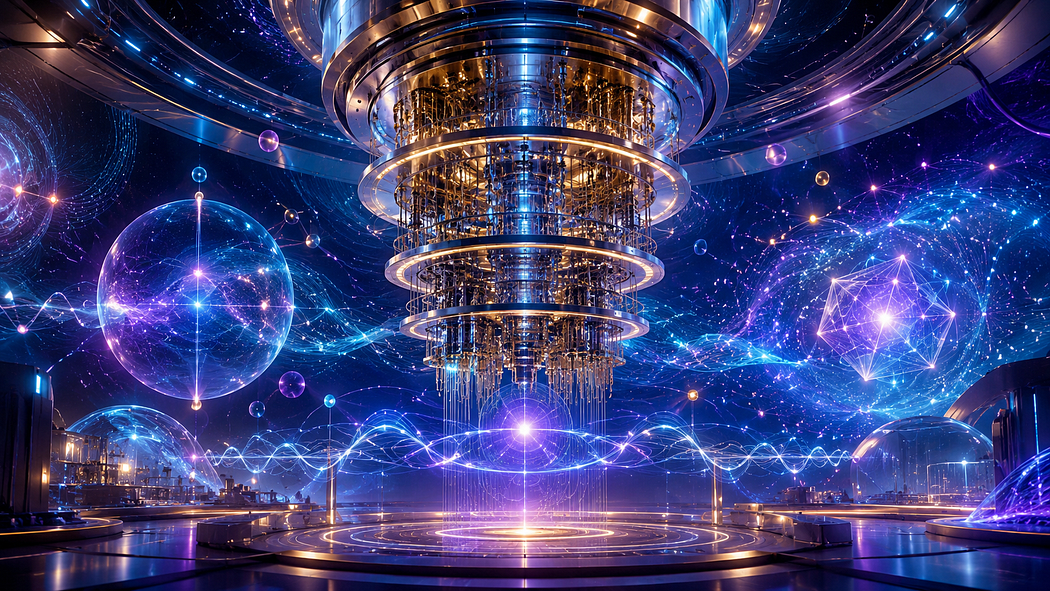
Quantum computers are often presented as the next great horizon of computation. They promise to surpass classical machines by exploiting superposition, entanglement, and Hilbert-space evolution. Yet,...
Holographic Computational Universe within the Simulation Hypothesis Spectrum
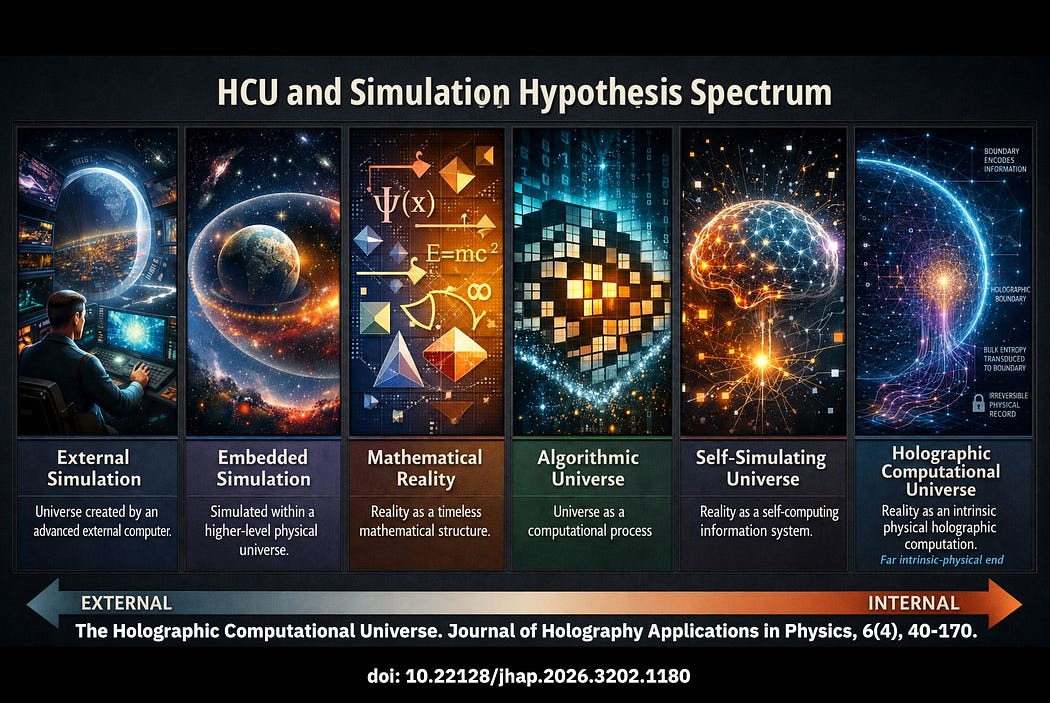
The term simulation hypothesis does not refer to a single claim but to a family of distinct positions. These differ in whether reality is generated by an external simulator, embedded within another p...
Classical Computer vs Holographic Computer
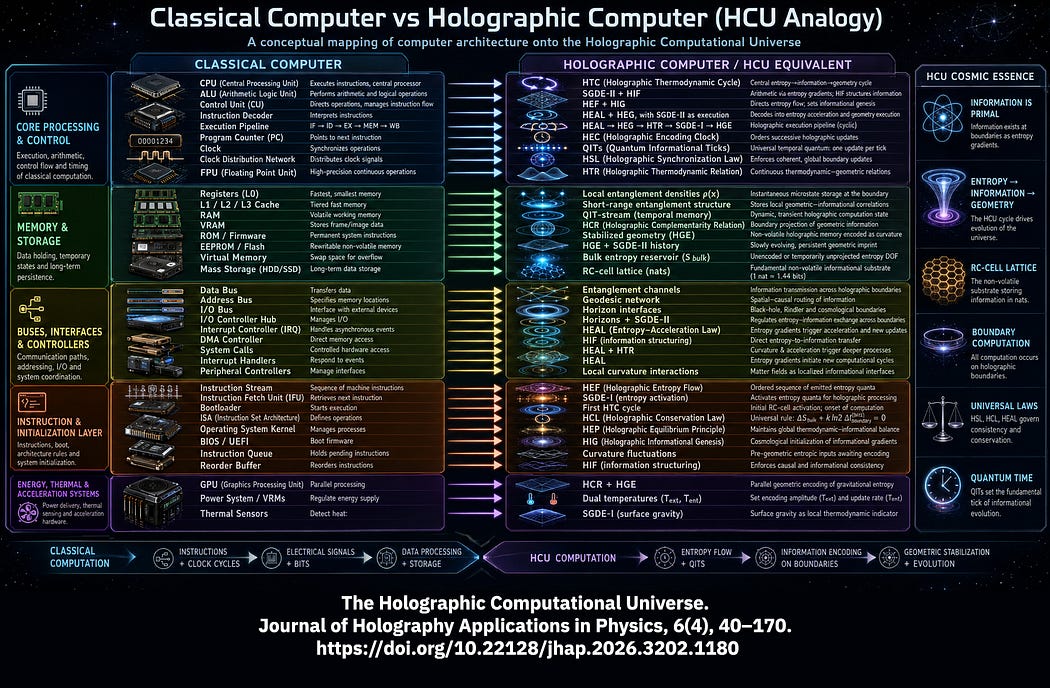
This illustration presents the analogy between a classical computer and the Holographic Computer (HC) proposed within the Holographic Computational Universe (HCU) framework. The goal is not to claim...
Holographic Computer and Structural Computation

- ordinary computation,
- quantum computation,
- holographic computation
A classical computer manipulates bits inside spacetime. A quantum computer manipulates qubits inside Hilbert space. A holograp...
The Holographic Computational Universe: Time, Gravity, and Reality as Emergent
In press in JHAP, Holographic Computational Universe proposes time, gravity, and spacetime emerge from entropy-to-information dynamics.
What if the universe is not built on matter first, nor on geomet...
The Holographic Computational Universe: Toward a Thermodynamic-Informational Foundation

For decades, modern theoretical physics has pointed toward a striking convergence: information, entropy, geometry, and gravitation appear to be more deeply connected than classical formulations ever ...
Universe as Holographic computational Memory?
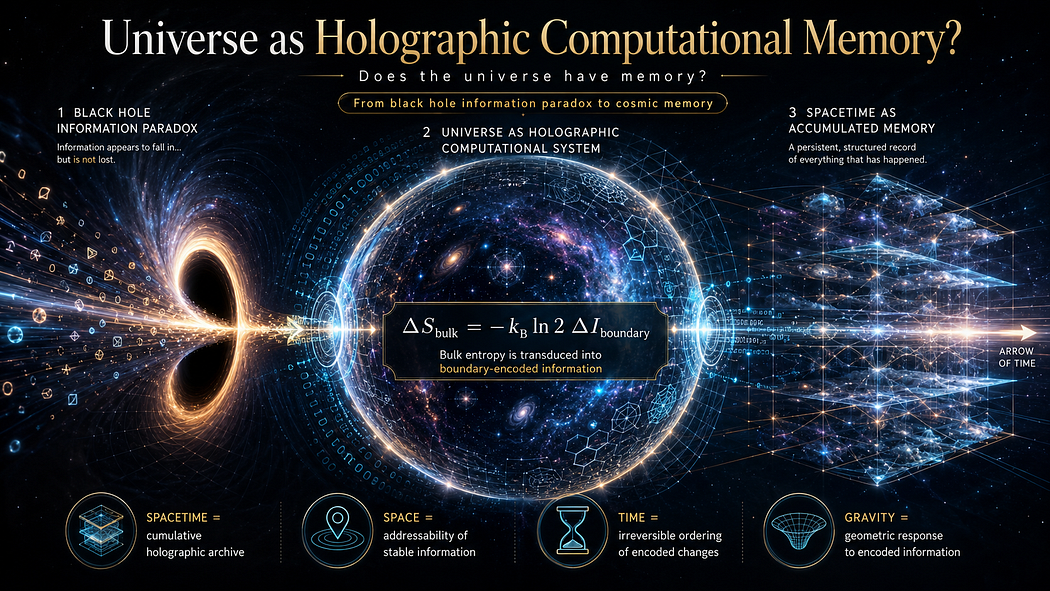
Does the universe have memory?
At first, the question sounds almost philosophical. Yet in modern physics, it can be reformulated more precisely: can physical information ever be truly lost, or is it a...